


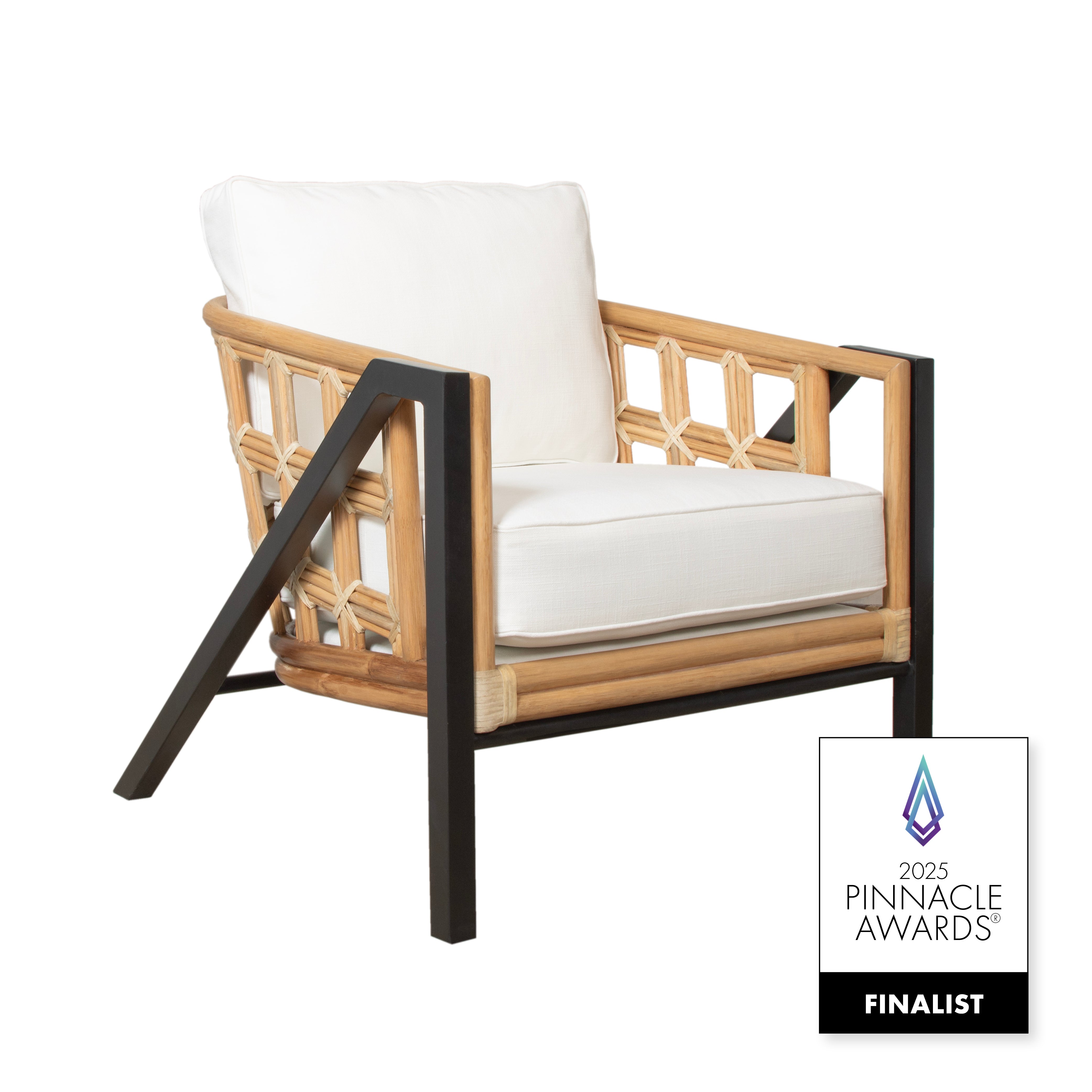
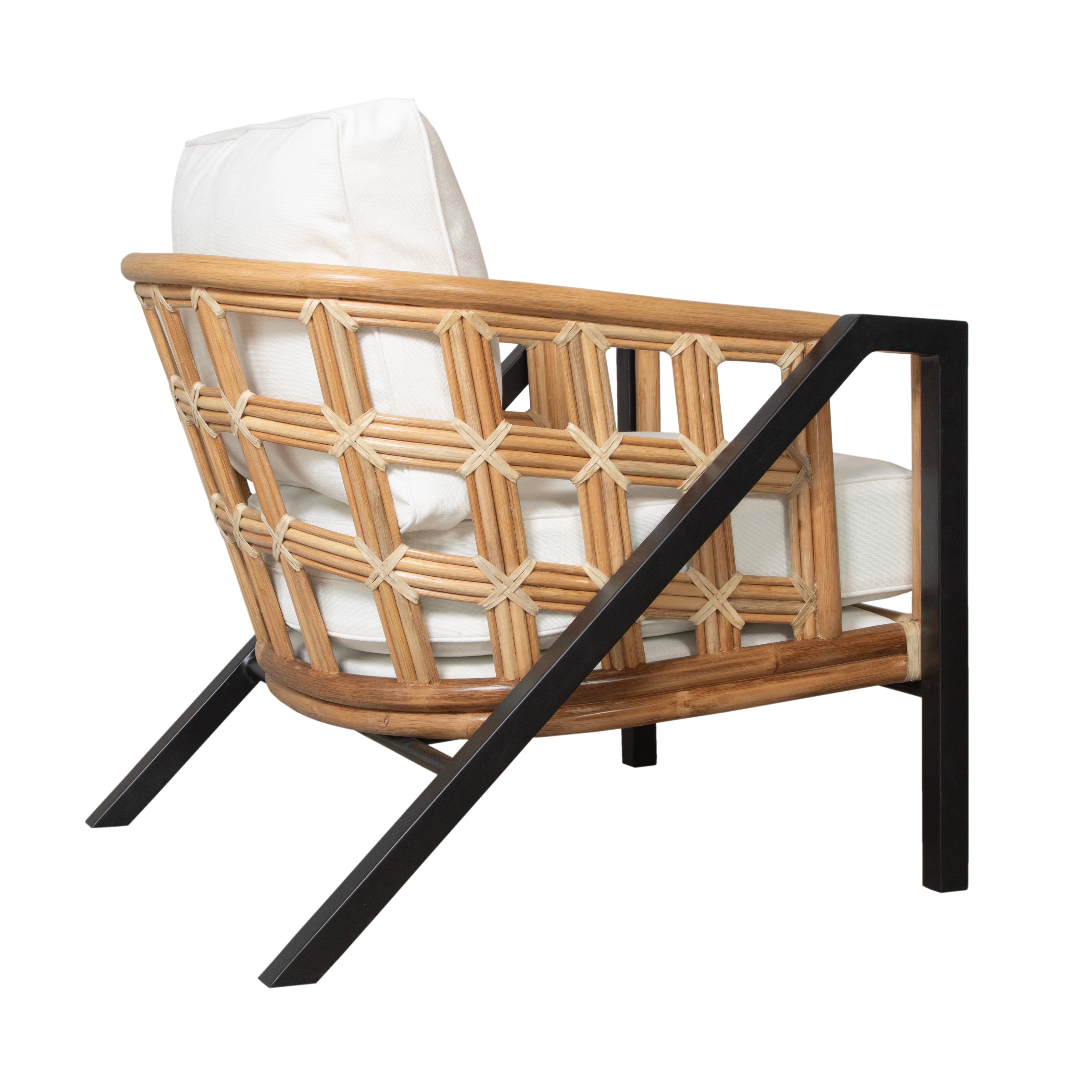




Before we dive in, one thing is clear… at David Francis, we don’t believe in one-note design. From the Lucca Lounge Chair to the Chippendale Writing Desk to the Nova Étagère, our pieces are layered with intention.
So today, we’re discussing why mixing materials isn’t a trend, but rather a philosophy.
Lariza: Tim, we’ve been highlighting several mixed-material pieces lately, like the Lucca Lounge Chair with its rattan seat and metal legs, or the Chippendale Writing Desk that combines round core rattan, wood, and metal. Why is layering materials so important in our designs?
Tim: When you mix materials intentionally, you create contrast, and contrast creates sophistication.
Take the Lucca Lounge Chair. The rattan wrapped with raw leather (or as we call it, rawhide) has warmth and texture. The metal legs add structure and refinement. Without the metal, it leans casual. Without the rattan, it loses soul. Together, it feels balanced and elevated.

Shop the Lucca Lounge Chair Here
Lariza: Let’s talk about the Chippendale Writing Desk. This one really showcases everything: raw leather, round core rattan, wood, and metal.
Tim: That piece is a perfect example of layering done right.
The raw leather wrapped around the rattan gives you architecture. It’s linear, strong, and grounded. The wood desktop anchors the piece; it gives it weight and function.
And the square metal legs refine the silhouette and give it that extra punch of modernism.
When you combine all of that thoughtfully, the desk feels substantial but not heavy. Textural but not busy. That balance is deliberate.
 Shop Chippendale Writing Desk Here
Lariza: We also have the Nova Étagère — wood paired with square core rattan. That one feels especially architectural.
Tim: Exactly. The Nova Étagère really leans into structure. The wood brings warmth and stability, while the square core rattan adds texture and depth within a strong, defined frame.
It’s a great example of how rattan doesn’t have to feel casual or coastal. When you pair it with clean lines and substantial wood elements, it becomes refined — almost architectural in presence. And then the dramatic arched top softens everything. It takes the piece from feeling rigid to feeling balanced. That curve introduces just enough movement to create harmony between strength and softness.

Lariza: Designers right now are leaning into texture more than heavy pattern. How does mixed-material furniture support that?
Tim: Texture is becoming the statement. Instead of relying on bold prints, designers are layering materials: rattan, wood grain, matte metal finishes.
Pieces like the Lucca, Chippendale, and Nova provide that texture naturally — allowing designers to layer a space without relying on heavy pattern or excess ornamentation. They photograph beautifully because they have dimension. And in person, they feel even richer.
Layering materials creates depth without overwhelming the space. That’s modern luxury.
Lariza: In one sentence, why is mixed-material rattan here to stay?
Tim: Because it brings together strength and softness, warmth and structure, and that balance never goes out of style.
Lariza: Tim, thank you for walking us through the art of layering materials and giving us a deeper look at how intention shapes every piece we create. It’s always inspiring to hear the thought process behind the design.
We hope today’s conversation was both enjoyable and useful — whether you’re specifying a statement piece or thoughtfully layering materials in your next project.
Until then… keep rattan-ing.